

Whisker Fatigue In Cats: Signs, Causes and Feeding Solutions
Key Takeaways
- Whisker fatigue is a term used to describe the discomfort some cats may feel when their highly sensitive whiskers repeatedly touch the sides of a narrow or deep food bowl.
- While widely discussed among cat owners and some veterinarians, whisker fatigue is not a formally recognised medical diagnosis, and the scientific evidence remains mixed.
- Common signs include reluctance to eat, pawing at food, leaving food in the bowl or appearing agitated at mealtimes.
- Simple feeding adjustments — such as switching to a wide, shallow bowl — are low-risk changes that may make mealtimes more comfortable for sensitive cats.
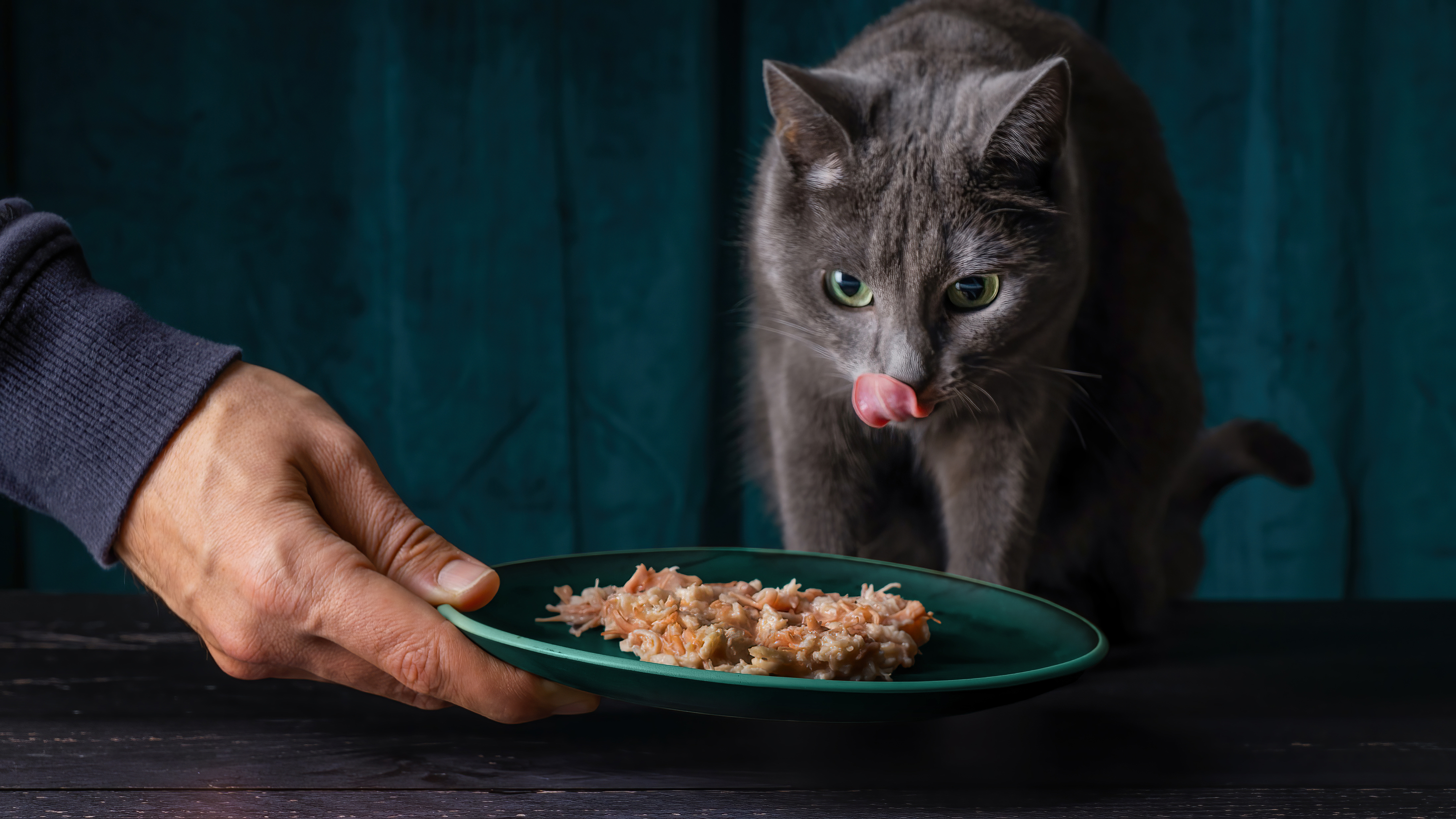
Image by Nika Benedictova on Unsplash
A cat’s whiskers are among the most remarkable sensory organs in the animal kingdom. These elegant, specialised hairs do far more than frame a feline’s face — they help cats navigate their world, detect subtle changes in air currents and assess the space around them. So when those exquisitely sensitive whiskers repeatedly bump against the sides of a food bowl, some cat owners and veterinarians believe it can lead to a condition known as whisker fatigue.
But what exactly is whisker fatigue, and should you be concerned? Let us explore the signs, the science and the simple feeding solutions that may help your discerning feline dine in comfort.
What Is Whisker Fatigue in Cats?
To understand whisker fatigue, it helps to first appreciate just how extraordinary a cat’s whiskers are. Whiskers — scientifically known as vibrissae — are not ordinary hairs. Their follicles are densely packed with blood vessels and sensory nerves, making them as sensitive as a human’s fingertips. When a whisker detects even the slightest change in air movement or physical contact, it transmits detailed information to the brain about the size, shape and speed of nearby objects.
Cats use their whiskers to make spatial and environmental assessments, helping them navigate in the dark, judge whether they can fit through narrow spaces and even detect prey. The Waltham Petcare Science Institute, Mars Petcare’s dedicated science centre, has long studied the sensory experiences of cats — including how they perceive aromas and flavours — recognising that feline senses operate in ways that are quite distinct from our own.
The theory of whisker fatigue suggests that when a cat’s whiskers repeatedly touch the sides of a narrow or deep bowl during eating, the constant sensory stimulation can become overwhelming — leading to discomfort or stress at mealtimes. Think of it as a kind of sensory overload: the very organs designed to help your cat sense the world are being bombarded with information they were not meant to process while simply trying to enjoy a meal.
Is Whisker Fatigue Real?
Whisker fatigue is widely discussed among cat owners and some veterinarians, but it is not a formally recognised medical diagnosis, and the limited research available is mixed.
While the science has not definitively confirmed whisker fatigue as a clinical condition, many cat owners report seeing a real difference when they switch food bowls. The key is to observe your own cat — if changing the bowl seems to help, there is no harm in making the adjustment. Every feline is an individual, and what matters most is that your cat feels comfortable and content at mealtimes.
Signs to Watch For: Whisker Fatigue Symptoms
If you suspect your cat may be experiencing whisker fatigue, there are several signs worth observing. Whisker fatigue symptoms can be subtle, but attentive cat owners often notice patterns:
- Reluctance to eat: your cat approaches the bowl but hesitates or walks away
- Pawing at food: pulling food out of the bowl to eat it on the floor instead
- Leaving food behind: eating only from the centre and leaving food around the edges
- Agitation at mealtimes: pacing, meowing or appearing stressed near the bowl
- Eating eagerly from a flat surface: happily consuming food placed on a plate or mat rather than in a bowl
- Changes in water drinking: splashing water out of the bowl or drinking from taps instead
If several of these sound familiar, it may be worth considering whether the bowl itself is part of the problem. For more on interpreting your feline’s behaviour, explore our guide to reading cat body language.
What Causes Whisker Fatigue in Cats?
The proposed cause of cat whisker fatigue is straightforward: constant, repeated contact between a cat’s whiskers and the sides of a food or water bowl. Deep, narrow bowls are the most commonly implicated, as they require a cat to reach down into a confined space where their whiskers brush against the walls with every bite.
Because whiskers are so richly innervated, this repeated stimulation may create a continuous stream of sensory input that some cats find unpleasant or overwhelming. It is rather like having someone constantly brushing the back of your neck while you try to eat — tolerable for some, deeply distracting for others.
Several factors may influence how likely a cat is to experience this discomfort:
- Bowl shape and depth: narrow, deep bowls create more whisker contact than wide, shallow ones
- Bowl material: some cats may be sensitive to the texture or temperature of certain materials
- Food volume: a nearly empty bowl may require the cat to reach deeper, increasing whisker contact
- Individual sensitivity: some cats are simply more sensitive to tactile stimulation than others
It is also worth noting that some cats display peculiar eating habits for reasons entirely unrelated to their whiskers. For a broader look at feline dining quirks, see our article on nine weird eating habits in cats and what to do about them.
Feeding Solutions: Choosing the Right Bowl
The most commonly recommended and lowest-risk change to try is adjusting your cat’s bowl. If whisker fatigue is the issue, a simple bowl swap may make a world of difference.
- Choose a wide, shallow bowl. A flat, broad dish allows your cat to eat without their whiskers touching the sides. A saucer or shallow plate can work just as well as a purpose-made whisker-friendly bowl.
- Consider the material. Ceramic and stainless steel bowls are easy to clean and do not absorb odours. Some cats prefer one material over another, so it may be worth experimenting.
- Try a flat feeding mat. Some cats do best when their food is spread on a flat mat or puzzle feeder, eliminating bowl contact entirely while adding a touch of enrichment to mealtime.
- Provide separate water and food stations. Cats often prefer their water source to be away from their food. A wide, shallow water bowl — or a cat water fountain — can reduce whisker contact while encouraging healthy hydration.
- Be patient with the transition. Some cats adjust to a new bowl immediately, while others need a little time. Offer food in both the old and new bowls for a few days, gradually phasing out the old one.
For a deeper understanding of how your cat’s digestive system works alongside their feeding habits, visit our guide to understanding your cat’s digestive system.
Ruling Out Other Causes of Eating Changes
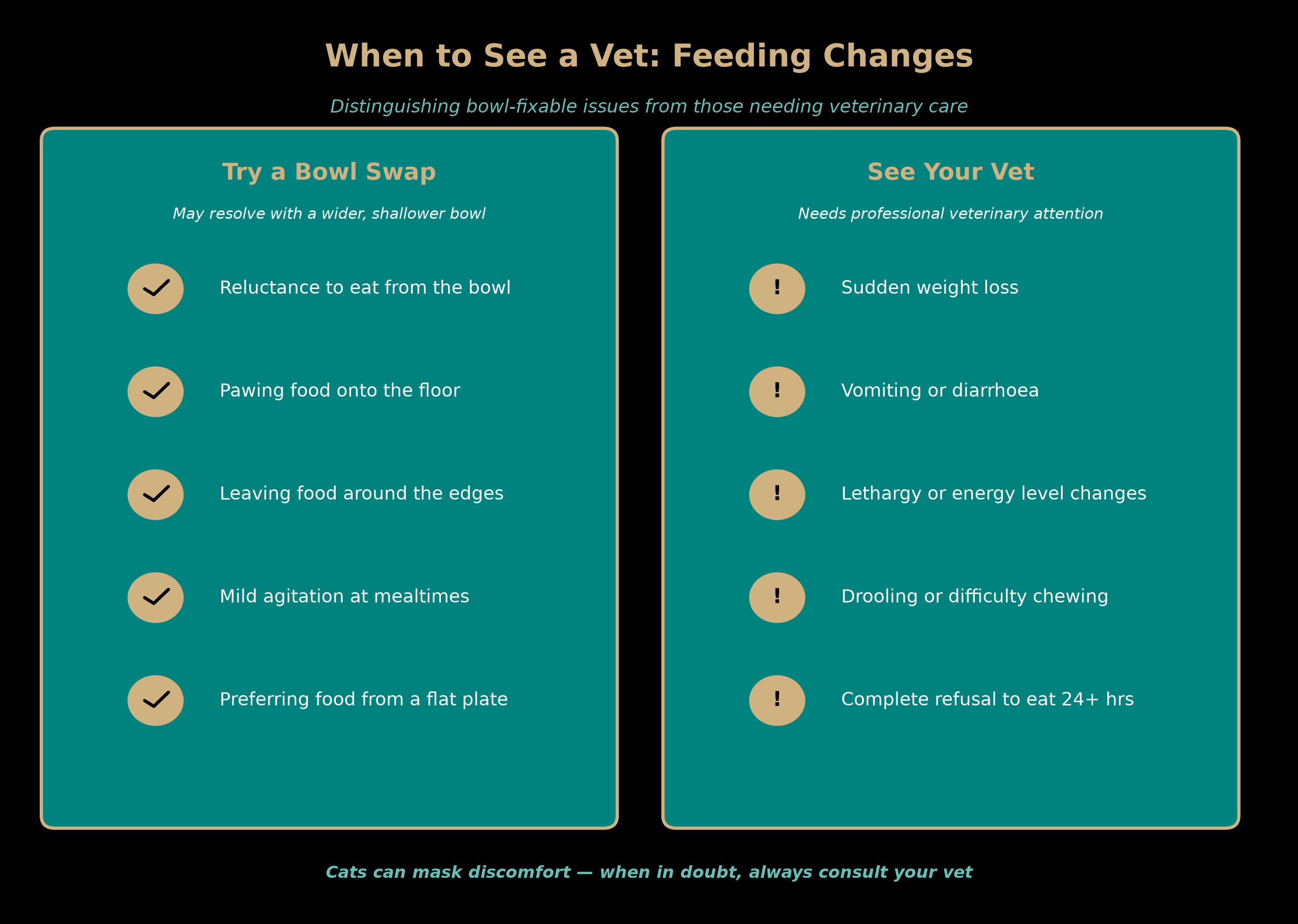
While adjusting the bowl is a sensible first step, it is important to close with an important caveat: changes in eating behaviour can also signal a genuine health issue, and it is worth ruling these out before assuming whisker fatigue is the cause.
If your cat’s reluctance to eat is accompanied by any of the following, consult your veterinarian rather than attributing it to whisker fatigue:
- Sudden weight loss or a noticeable decrease in body condition
- Vomiting or diarrhoea alongside the change in appetite
- Lethargy or a marked change in energy levels
- Dental signs such as drooling, pawing at the mouth or difficulty chewing
- A complete refusal to eat for more than 24 hours
Cats are masters at masking discomfort — WALTHAM™ researchers have noted that felines can often hide their distress, making regular observation and veterinary care essential for catching issues early. A new bowl is a lovely gesture, but it is no substitute for professional attention when something more serious may be at play.
Every Meal Is a Moment of Devotion
Every mealtime is an opportunity to show your cat just how cherished they are. If a simple bowl swap makes dining more comfortable for your sensitive feline, it is a small change with a meaningful reward. For more on understanding your cat's wellbeing, see our guide to decoding your cat's tail — because every detail of feline behaviour can offer clues to their health and happiness.
Then explore the full DINE® range of premium cat food and discover how the right nutrition makes every meal a moment worth savouring.
Frequently Asked Questions
Kittens can experience whisker sensitivity just like adult cats, but they’re generally more adaptable and may adjust to bowl shapes more readily. If a kitten seems reluctant to eat, it's wise to consult your veterinarian to rule out other causes.
No — never trim a cat’s whiskers. Whiskers are essential sensory organs that help cats navigate their environment, judge spaces and detect movement. Cutting them can cause disorientation, stress and anxiety. The best response is to change the bowl.
Most cats adjust to a new bowl within a few days, but some may take a week or longer. To help transition, offer food in both the old and new bowls at first, then slowly reduce the amount in the old bowl until your cat is at ease using the new one.
There's no strong evidence that specific breeds are more prone to whisker fatigue, but cats with particularly long or prominent whiskers (eg. Maine Coons) may experience more contact with narrow bowls simply due to the size of their whiskers.