

Cat Litter Hygiene and Maintenance: Keeping the Litter Box Clean
Key Takeaways
- Scoop daily, refresh regularly. Removing waste every day and performing a full litter change on a routine schedule keeps the tray fresh, inviting and free of lingering odour.
- Clean, don’t conceal. A thorough wash beats masking smells with strong fragrances — your discerning feline prefers a clean, neutral-scented tray every time.
- Let your cat choose. Select a litter type that suits your cat’s individual preferences for texture and scent, and introduce any changes gradually to keep toileting stress-free.
- Watch for signals. Sudden litter box avoidance or changes in toileting behaviour can point to a hygiene or health concern worth discussing with your vet.
Your cat is a creature of exquisite standards — and few things matter more to a discerning feline than a pristine place to toilet. Good cat litter hygiene isn’t simply about keeping your home fresh; it’s an act of devotion that supports your cat’s comfort, wellbeing and sense of dignity. Maintaining a clean litter tray reduces unpleasant odours, keeps the litter area inviting and encourages your cat to use it consistently.
In this guide, we’ll walk through the essentials of cat litter maintenance — from daily scooping to full tray cleans — so your feline companion enjoys the spotless toileting experience they so richly deserve.
How Often Should You Clean a Cat Litter Box?
There’s a quiet art to keeping a cat litter box in fine form. Rather than relying on a rigid schedule, cat litter hygiene is best guided by observation — scooping frequently, topping up when litter runs low and deep-cleaning before residue builds up. How often to clean a litter box depends on the litter type, the number of cats in your home and how heavily the tray is used.
Cats are fastidious by nature. Many will quietly avoid a tray that no longer meets their standards, so the goal of litter box cleaning is to stay a step ahead of your cat’s expectations rather than catch up once they’ve already sought alternatives.
Daily Scooping
Scooping is the cornerstone of cat litter maintenance. Removing urine clumps and faeces at least once a day — ideally twice — keeps the tray usable, curbs odour and signals to your cat that their toileting area is being cared for. For multi-cat households, more frequent scooping helps ensure each cat always finds a clean spot.
When to Replace the Litter
Even with diligent scooping, litter gradually loses its freshness. A full litter change is typically needed every one to two weeks for clumping litter, and more often for non-clumping varieties — though the precise interval depends on the litter manufacturer’s guidance and your cat’s habits. When the remaining litter looks tired, smells faintly even after scooping or no longer clumps effectively, it’s time for a refresh.
When to Deep-Clean the Tray
Scooping removes waste, but only a full clean lifts the residue that clings to the tray itself. Aim to deep-clean every two to four weeks, or whenever you change the litter entirely. A thoroughly washed, dried and refilled tray is the foundation of lasting cat litter hygiene — and your cat will notice the difference.
How to Clean a Cat Litter Tray Properly
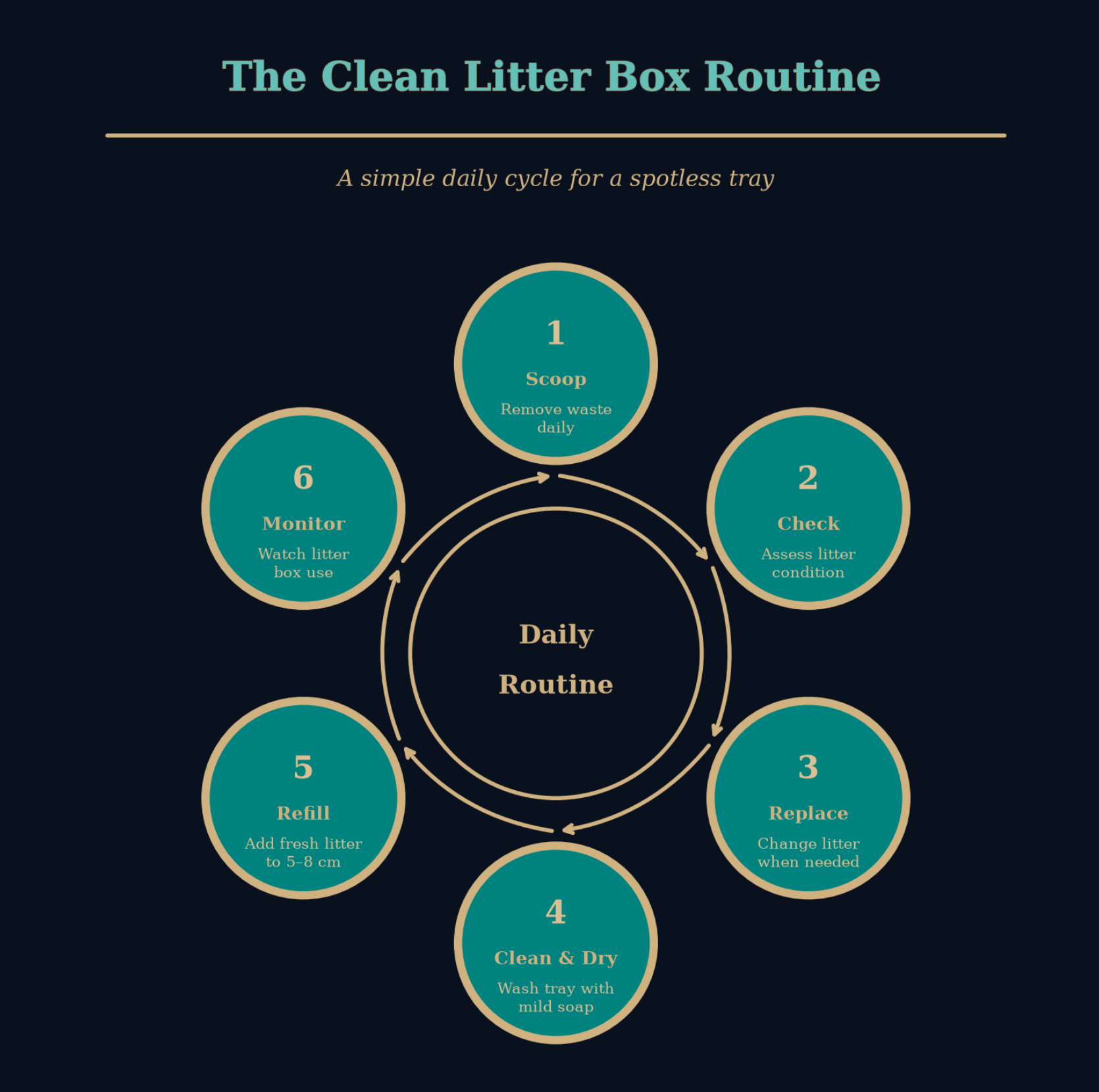
A little ritual goes a long way. Litter tray cleaning is most effective when approached as a simple, repeatable routine — empty, wash, dry and refill. Keeping the process consistent helps maintain cat litter hygiene without turning tray care into a chore.
Empty the Litter Safely
Begin by removing all waste and used litter, disposing of it according to your local council guidance and the litter product’s instructions. Most clumping and clay litters should be bagged and placed in household waste rather than flushed. A clean start makes the rest of the routine far more effective.
Wash the Tray
Wash the empty tray with warm water and a mild, unscented soap, following the tray and litter manufacturer’s cleaning guidance. Avoid mixing incompatible cleaning products, and steer clear of heavily fragranced solutions — strong residual scents can discourage sensitive cats from returning to the tray.
Dry Before Refilling
A clean, completely dry tray is essential before adding fresh litter. Any lingering moisture can clump the new litter, reduce its effectiveness and create the very odours you’re trying to prevent. Once dry, refill to the recommended depth — usually around 5–8 centimetres — so your cat can dig and bury to their heart’s content.
Choosing the Right Cat Litter
The right litter does far more than fill a cat litter box — it shapes odour control, tracking, ease of cleaning and, crucially, whether your cat feels comfortable using the tray. Cat hygiene begins with a substrate your feline actually approves of.
Clumping litters make waste easy to lift out whole, which simplifies daily scooping and helps the tray stay fresh between full changes. Non-clumping litters absorb moisture differently and may suit some cats’ texture preferences, though they often require more frequent complete replacement. Beyond the clumping question, consider absorbency, how much the litter tracks beyond the tray, any fragrance and — most importantly — your individual cat’s response.
There’s no single universal “best” litter; the finest choice is the one your cat willingly, even enthusiastically, uses. Watch their behaviour after a change and let their preferences guide you. After all, your discerning feline is the true head critic at this establishment.
How to Reduce Litter Box Odour
Good odour management begins not with fragrance, but with removing the source. Litter box odour is best tackled through frequent scooping, appropriate litter depth, regular cleaning and thoughtful placement — layering scent on top of waste simply masks the problem and can put your cat off the tray entirely. Sound cat litter maintenance keeps smells at bay at their origin.
Scoop Frequently
The single most effective step against odour is prompt waste removal. Scooping at least once daily — twice in busy or multi-cat homes — prevents ammonia and bacteria from building up and keeps the tray pleasant for both you and your cat.
Keep the Tray and Surrounding Area Clean
Spilled litter and tracked granules around the tray can carry odour and bacteria. Sweep or vacuum the surrounding area regularly, and consider a mat beneath the tray to catch stray litter. A tidy perimeter completes the picture of a well-kept litter box.
Choose an Appropriate Location
Place the tray in a quiet, accessible spot with good ventilation — away from loud appliances and feeding areas, yet easy for your cat to reach. A well-ventilated location helps odour disperse naturally without exposing your cat to draughts or disruption.
When Odour Changes Unexpectedly
If litter box odour suddenly becomes unusually strong, or you notice changes in your cat’s urine, faeces or toileting habits, it’s wise to seek veterinary advice. Shifts in smell or behaviour can sometimes point to a health concern that cleaning alone won’t resolve.

How Many Litter Boxes Do Cats Need?
In multi-cat households, a single tray can become a point of quiet tension. Providing multiple litter resources gives each cat accessible toileting options without unnecessary competition — a simple gesture that supports harmony and cat care alike.
A commonly suggested guide is one tray per cat plus one extra, arranged across different areas of the home so no cat feels cornered. Household layout matters too: trays on separate floors or in different rooms offer genuine choice. While this is a helpful starting point rather than a fixed rule, the principle holds — when cats feel they have safe, uncrowded options, toileting stays stress-free for everyone.
For tips on creating a calm, cat-friendly environment beyond the litter tray, explore our guide to creating a cat sanctuary at home.
Common Litter Box Hygiene Mistakes
Even the most devoted cat carer can slip into habits that undermine all their good work. Recognising the everyday missteps in litter box cleaning and cat litter maintenance helps keep the tray appealing — and your cat happily consistent in their routine.
Not Scooping Often Enough
Inconsistent scooping allows waste and odour to accumulate quickly, making the litter tray less appealing and potentially encouraging your cat to toilet elsewhere. Daily scooping is the simplest way to safeguard cat litter hygiene and cat hygiene more broadly.
Using Strong Fragrances to Hide Odour
Heavily scented litters, sprays and cleaning products are no substitute for removing waste. Strong fragrances can overwhelm a cat’s sensitive nose and make the tray an unwelcoming place. A clean, neutral-smelling tray is always preferable to a perfumed one.
Changing Litter Type Suddenly
Some cats resist abrupt changes in litter texture, scent or substrate. If you need to switch litter types, do so gradually over a week or so, blending the new litter with the old. A gentle transition keeps toileting familiar and stress-free.
Ignoring Changes in Toileting Behaviour
If your cat suddenly starts toileting outside the tray, or their urination and defecation patterns shift — especially if accompanied by other symptoms — treat it as a signal rather than a nuisance. Such changes can point to a hygiene issue, litter box dissatisfaction or a health concern worth discussing with your vet. Paying attention to litter tray cleaning and behaviour, rather than assuming it’s mischief, is the hallmark of thoughtful cat care.
For more on decoding unusual feline habits, see our guide to nine weird eating and behaviour habits in cats.
A Spotless Tray, a Contented Cat
Keeping on top of cat litter hygiene is one of the most meaningful ways to show your devotion — and your discerning feline will thank you with every confident visit to a clean, fresh tray. Because a cat who feels cared for in every detail is a cat who thrives.
For more inspiration on understanding your cat’s quiet signals, explore our guide to reading cat body language.